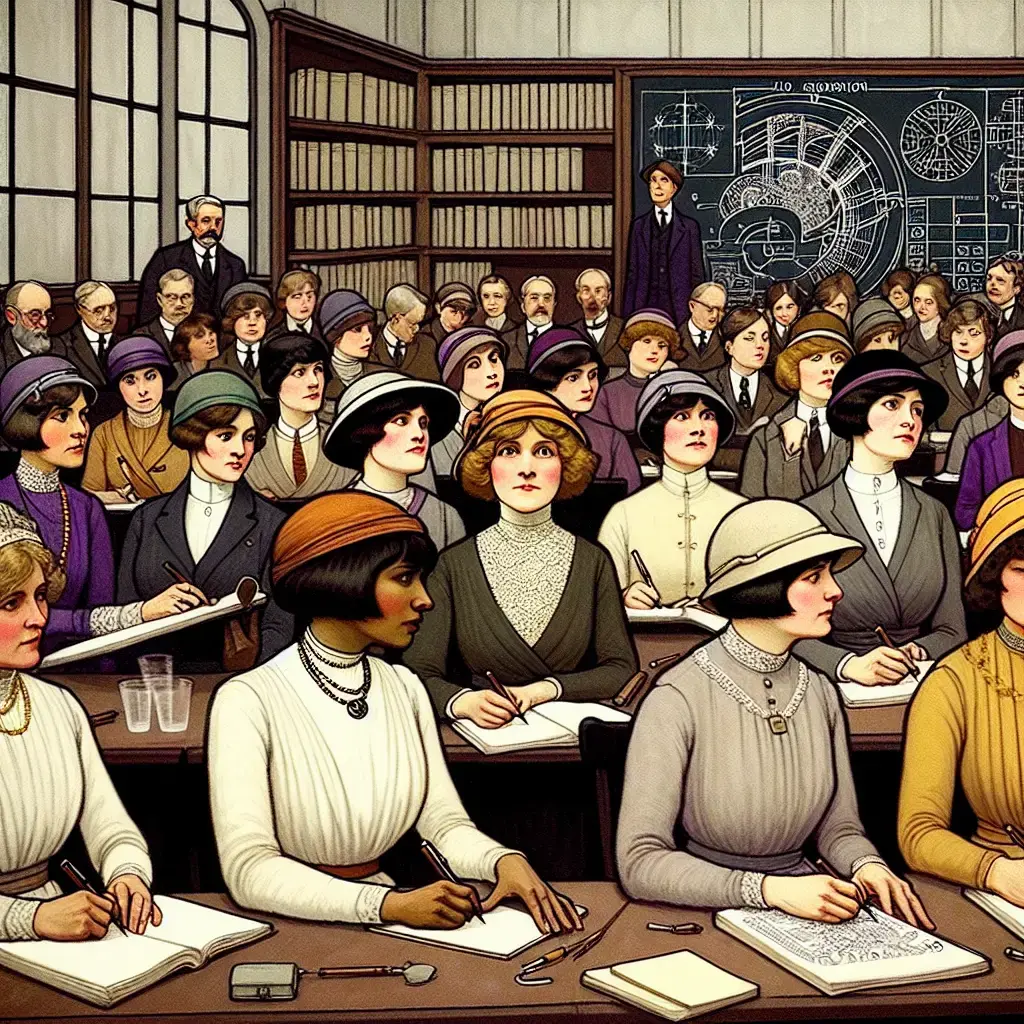
The unsung pioneers of science journalism were women who broke barriers and paved the way for future generations.
The role of women in STEM (Science, Technology, Engineering, and Mathematics) has been pivotal in shaping the modern world, yet their contributions have often been overlooked. One significant area where women have made a lasting impact is in science journalism, a field that began to take shape in the 1920s. This blog post explores how these trailblazing women not only informed the public about scientific advancements but also paved the way for future generations of women in STEM.
Breaking into the Male-Dominated World of Science Journalism
In the early 20th century, as newspapers and magazines began to focus more on scientific topics, women emerged as significant contributors to science journalism. Despite facing societal barriers and gender biases, these women worked diligently alongside their male counterparts, bringing complex scientific ideas to a general audience.
Early Innovators: Female science journalists of the 1920s and beyond were pioneers in their own right. They took on the challenge of translating dense scientific concepts into accessible language for the public. Their work spanned a wide range of topics, from astronomy to health issues such as venereal disease.
Overcoming Barriers: These women often had to work harder than their male colleagues to gain recognition and respect in their field. Despite these challenges, their determination and passion for science fueled their writing and inspired many readers.
The Impact of Female Science Journalists
The influence of these early female science writers extends far beyond their time. Their work laid the foundation for the integration of women into STEM fields and demonstrated that women could excel in scientific communication.
Public Education: By making science accessible to the masses, these journalists played a crucial role in educating the public. Their articles helped demystify scientific concepts and encouraged an interest in science among readers from all walks of life.
Inspiration for Future Generations: The legacy of these pioneering women continues to inspire young girls and women to pursue careers in STEM. Their stories serve as a testament to the power of resilience and determination.
Continuing the Legacy
Today, women continue to break barriers in STEM fields, following in the footsteps of those early science journalists. Efforts to increase diversity and inclusion within these fields are ongoing, but there is much to learn from the past.
Supporting Women in STEM: Creating supportive environments and mentorship opportunities is essential for encouraging more women to enter and thrive in STEM fields. Recognizing and celebrating the achievements of female scientists and journalists can inspire future generations.
Promoting Inclusivity: As society progresses, it is vital to continue advocating for gender equality in STEM. Encouraging diverse voices leads to richer discussions and innovations that benefit everyone.
In conclusion, the role of women in science journalism serves as an inspiring example of how determination and passion can overcome societal obstacles. The efforts of these pioneering women laid the groundwork for today's female scientists, engineers, and mathematicians. By continuing to support and celebrate women's contributions to STEM, we can ensure a future where everyone has the opportunity to succeed.
For those interested in learning more about this fascinating history, you can find additional details through this link.
Until next time, let us celebrate the past while building a brighter future together. Keep questioning, keep exploring, and most importantly, keep inspiring.
Author: Amanda Collins